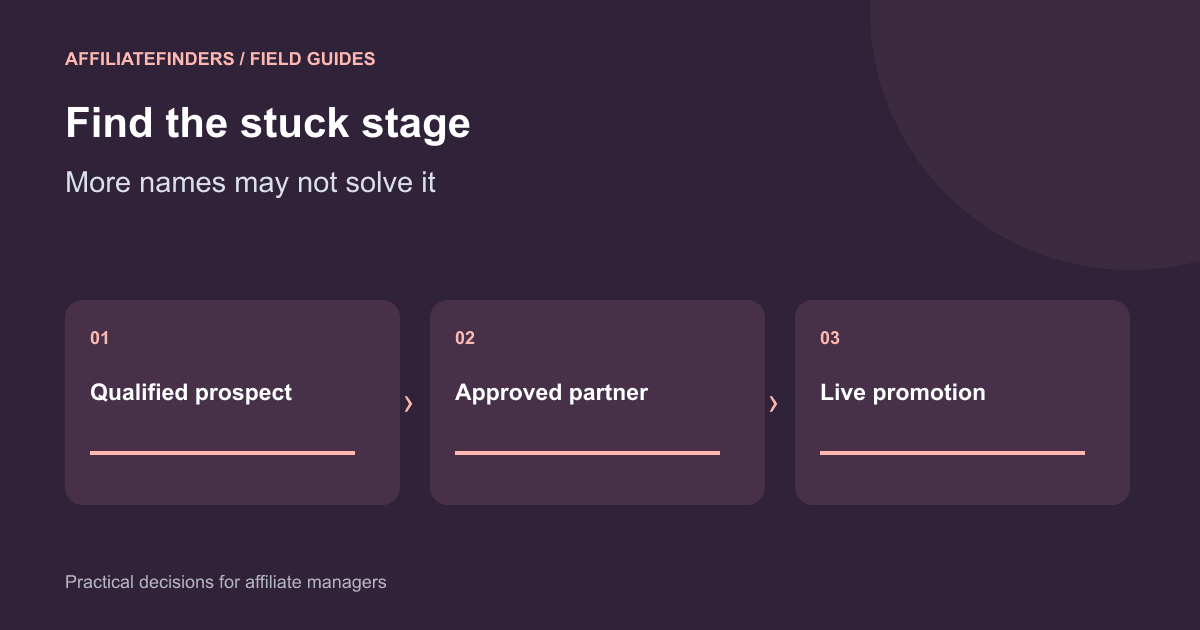
When an affiliate program stalls, recruiting more names is an easy response. It may also be the wrong one. Look at the path from qualified prospect to approved sale and find where the progress stops. Each stage calls for a different fix.
Count the stages separately
Here is a fictional month: 40 researched prospects, 20 qualified, 15 contacted, six replies, four approvals, and one live placement. That is not simply a “low sales” problem. Three approved partners have not published yet, so the next investigation belongs in onboarding and placement support.
Record why prospects leave the process. A poor audience fit, missing sample, unavailable product, or delayed decision are useful distinctions. Without them, the team can mistake more outreach for progress while the same obstacle remains.
If replies are scarce, inspect the fit and offer
Read the actual publisher content and your message side by side. Does the proposal belong in their work? Does it explain a reader benefit? Can the publisher understand the commercial terms and respond with a small next step?
Verify the contact route and respect stated preferences. Avoid promises about earnings derived from estimated traffic. A relevant placement idea and accurate terms give a prospect something concrete to evaluate.
If approvals do not become promotions, test onboarding
Try the process with new-partner access. Find the terms, create a deep link, access images, and locate an answer to a common product question. Broken permissions or vague instructions can stop an interested publisher before the first click.
Ask what the partner planned to publish and what is missing. A product reviewer may be waiting for a sample; a newsletter may have no confirmed offer dates. Solve the identified obstacle rather than sending another generic reminder.
If traffic does not become retained orders, follow the shopper
Check the destination, mobile experience, offer accuracy, product availability, shipping costs, checkout, and tracking. Compare the partner's promise with what the visitor sees. A mismatch can make good traffic look bad.
Review order value, approved commission, returns, and earnings per click by partner and placement. Conversion rates differ by audience and buying stage. A universal threshold cannot tell you whether a particular relationship works economically.
If sales grow but profit does not, review the total cost
Include commission, platform charges, agency or internal management, samples, fixed placements, bonuses, discounts, and returns. Examine customer quality and attribution without assuming every credited order is incremental.
Assign one owner and a next review date to the highest-priority fix. Keep recruiting where it is justified, but do not overwhelm partners with a journey your team cannot support. Track whether the chosen fix changes the blocked stage before adding another initiative.
Use a stage log that leads to a decision
Keep one row per prospect or partner with the source, qualification reason, date contacted, reply status, approval date, intended placement, live URL, blocker, owner, and next action date. Keep unknown values blank or explicitly pending. A missing placement URL should not be counted as a confirmed live promotion.
Review the oldest unresolved records alongside the totals. For an approved reviewer waiting on a sample, the action may be to confirm inventory and dispatch timing. For a live placement with clicks but no orders, check the destination and measurement before assuming the audience is wrong. Record the evidence that will show the fix worked, such as a working deep link or a published placement, then close the task only after that evidence exists.
Your Next Recruitment Step
Build a simple stage count for the past month and examine the largest meaningful drop. Read a few actual cases behind that number. Fix the common obstacle first, then use the next month's evidence to decide where to invest. For help investigating the blocked stage and managing the recruitment and activation work, explore Experience Advertising's affiliate program management service.
Founder & CEO, AffiliateFinders · 20+ Years in Affiliate Marketing
Evan Weber founded Experience Advertising in 2007 and builds marketing tools including AffiliateFinders. His work spans affiliate recruiting, paid advertising, conversion optimization, and online business growth.